Ecuadorian Art in the International Market
How Ecuadorian contemporary art moves from local identity to international collections, and what collectors and galleries in the US and Mexico should know.
The Latin Colors
12/4/20265 min read

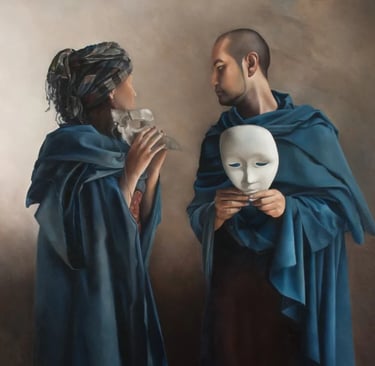
Every painting begins somewhere. It may emerge from a personal memory, a familiar landscape, a human encounter, or a question that an artist has carried for years. In Ecuador, these starting points unfold within a culturally diverse environment shaped by the Andes, the Pacific coast, and a rich history of artistic expression. Today, Ecuadorian contemporary art offers a way to explore these experiences while participating in a wider international conversation about identity, emotion, and the role of art in contemporary life.
For collectors, galleries, and curators in the United States and Mexico, discovering art from Ecuador means encountering perspectives that can bring new depth and individuality to contemporary collections.
How Local Identity Becomes a Universal Visual Language
Contemporary painting often moves between two seemingly opposite ideas: the desire to express a specific cultural identity and the ability to communicate with audiences around the world. Yet these ideas are not in conflict. An artist can draw inspiration from a particular place while exploring emotions and experiences that resonate far beyond its borders.
In Ecuador, the country’s cultural diversity provides a rich context for artistic exploration. Contemporary painters interpret their surroundings through different techniques, subjects, and visual languages. Some investigate memory and belonging, while others explore the human figure, symbolism, color, or the changing relationship between individuals and society.
The result is not a single national style, but a collection of distinct artistic voices. This diversity is part of what makes Ecuadorian painting worth discovering: each artist offers an individual interpretation rather than a predetermined image of the country.
For international audiences, the encounter begins with the artwork itself. A composition, a face, or an unexpected use of color can establish an immediate connection. Learning about the artist’s background then adds another layer of meaning, transforming visual curiosity into a deeper cultural experience.
Ecuadorian Contemporary Painting in a Global Conversation
The international art world brings together artists from different regions, generations, and cultural backgrounds. Galleries, exhibitions, art fairs, online platforms, and direct artist relationships allow collectors to discover work beyond their immediate surroundings.
Within this environment, an Ecuadorian contemporary artist can contribute a distinctive perspective without needing to follow a single international trend. The most compelling work often emerges when an artist develops a consistent visual language, engages seriously with a subject, and creates paintings that reward sustained attention.
Figurative painting offers a particularly direct way to participate in this conversation. The human body, facial expression, and gesture can communicate complex emotional experiences without depending entirely on language. Through these elements, a painting can connect an artist working in Quito with a collector in Miami, New York, or Mexico City.
For galleries and curators, discovering artists from Ecuador can broaden the perspectives represented in exhibitions and collections. For private collectors, it can offer an opportunity to build a collection around individual artistic vision, cultural diversity, and a personal response to the work.
Collectible Latin American Art: Beyond Trends
Interest in collectible Latin American art can encompass many different motivations, from cultural connection and aesthetic appreciation to the desire to support artists whose work deserves greater visibility. However, collecting thoughtfully requires looking beyond geographic origin or current trends.
The quality and originality of the artwork, the artist’s development, the consistency of the practice, and the availability of reliable documentation all contribute to an informed acquisition. Provenance, condition, transparent pricing, and clear shipping arrangements are especially important when purchasing paintings internationally.
For emerging artists, building meaningful relationships with galleries and collectors can be just as important as gaining visibility. These relationships allow buyers to understand the artist’s process and follow the evolution of a body of work over time.
Original paintings can also find a place beyond traditional collections. Interior designers, hospitality businesses, and corporate art consultants may seek distinctive works that introduce personality, emotion, and visual character into residential and commercial spaces. A carefully selected painting can become a focal point while establishing a connection between the space, its occupants, and the artistic vision behind the work.
From Quito to International Art Collections
Working from Quito, Ecuador, offers an opportunity to develop an artistic perspective rooted in a particular cultural environment while reaching audiences across geographical boundaries. For Paul Calderon, figurative painting provides a way to explore the human experience through an individual visual language and invite viewers into a dialogue that extends beyond the canvas.
The journey from local artistic practice to international recognition is built through the quality of the work, consistent presentation, professional relationships, and opportunities for audiences to discover and engage with the artist.
For collectors in the United States and Mexico, galleries, curators, and interior design professionals, exploring Ecuadorian painting can open the door to perspectives that complement established collections and contemporary spaces.
Discover the Work of Paul Calderon
Discover the work of Paul Calderon, an Ecuador-based figurative artist, and explore how original painting can bring a distinctive Latin American perspective to private collections, galleries, and thoughtfully designed interiors.
Visit the gallery, see available original paintings, or contact the artist about acquisitions and professional collaborations.
Paul Calderon
Contemporary Figurative Realist Artist
Newsletter
+593 99 972 9784
© 2026 Paul Calderon. All rights reserved.
Through light, form, and the human figure, Paul Calderon creates timeless works that explore beauty, emotion, and presence.